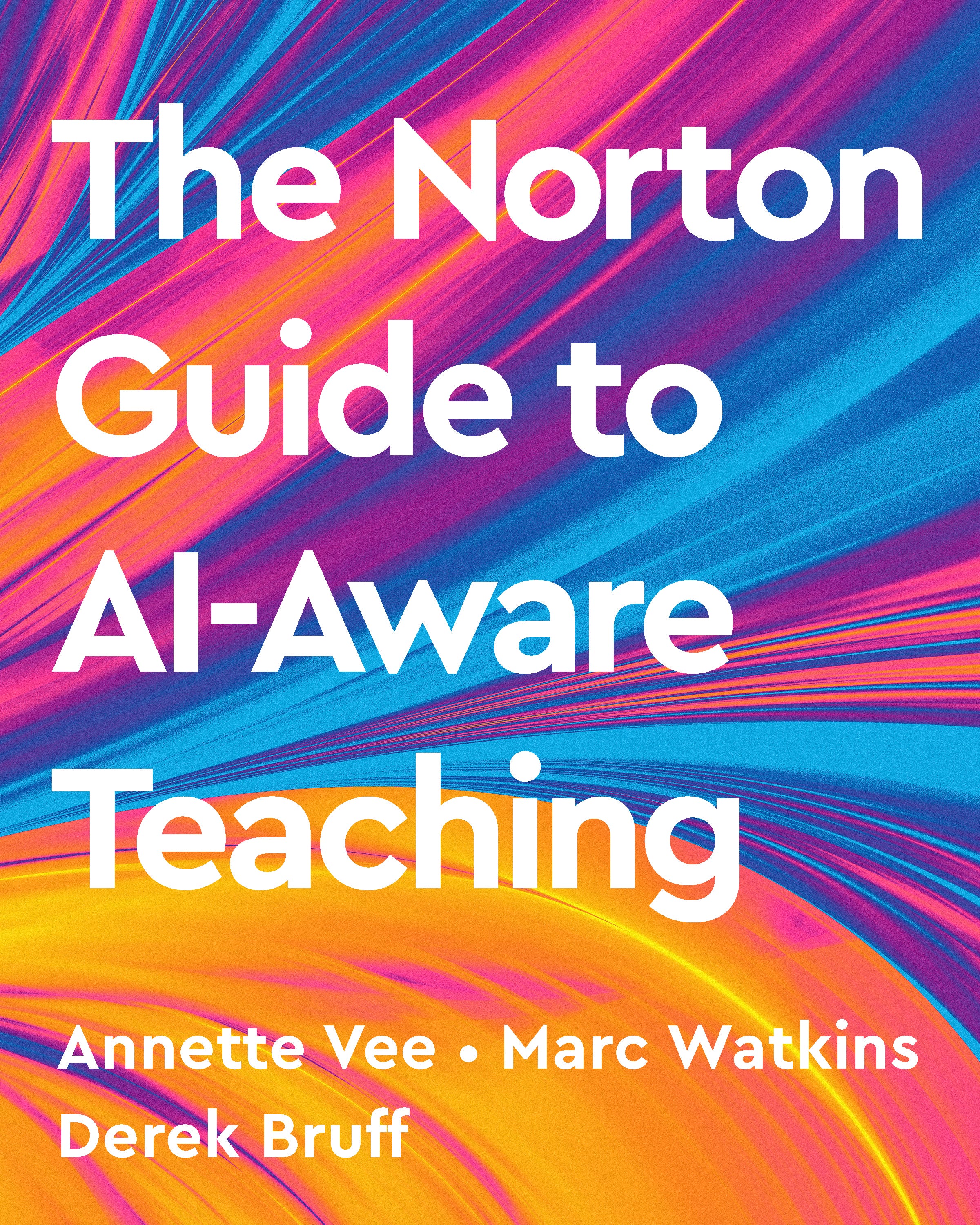
Generative AI tools like ChatGPT may be unavoidable in education, but that doesn’t mean we have to surrender our agency or teaching to automation. I founded the Mississippi AI Institute for Teachers to help faculty navigate AI and maintain our values in the process. I regularly write about AI on Substack and in a column at The Chronicle of Higher Education. I’m also a coauthor of The Norton Guide to AI-Aware Teaching.

Balancing Curiosity with Skepticism
Working With Faculty
Navigating AI calls for practical, responsible approaches that may involve resisting AI’s uncritical adoption while also engaging AI for others.
Washington Post
Molly Roberts
There is no better place to see the promise and the peril of generative artificial intelligence playing out than in academia. And there’s no better place to see how academia is handling the explosion in ChatGPT and its ilk than at Ole Miss.

AI Advice Column
Can Educators Counter ‘Agentic AI’?
The Chronicle
If academics don’t deal with these problematic tools now, we’ll lose online education.
How to Grapple With the AI Already on Your Campus
The Chronicle
Three steps any faculty member can take to understand which AI features are now embedded in applications you use every day.
Your Students Need an AI-Aware Professor
The Chronicle
Here’s a sustainable plan to bring you up to speed on a technology that academe can’t afford to ignore.
What is the value of thinking when a machine can do it for you? That’s the question we all must center in our conversations about the future of higher education. AI can now complete entire courses — no prompting required. Likewise, faculty can use AI to grade students, leaving many to ask what the point of learning or seeking qualifications for a degree is if an algorithm can do it. Every campus needs to hold sustained conversations about ways it can better communicate its purpose. Learning is about building community, and AI might be a valuable tool for some, but it cannot replace the vital role colleges serve in nurturing future leaders. We must find ways to better advocate for thinking and learning as a public good, juxtaposed against the increasing efficiency offered by the automation of learning.

